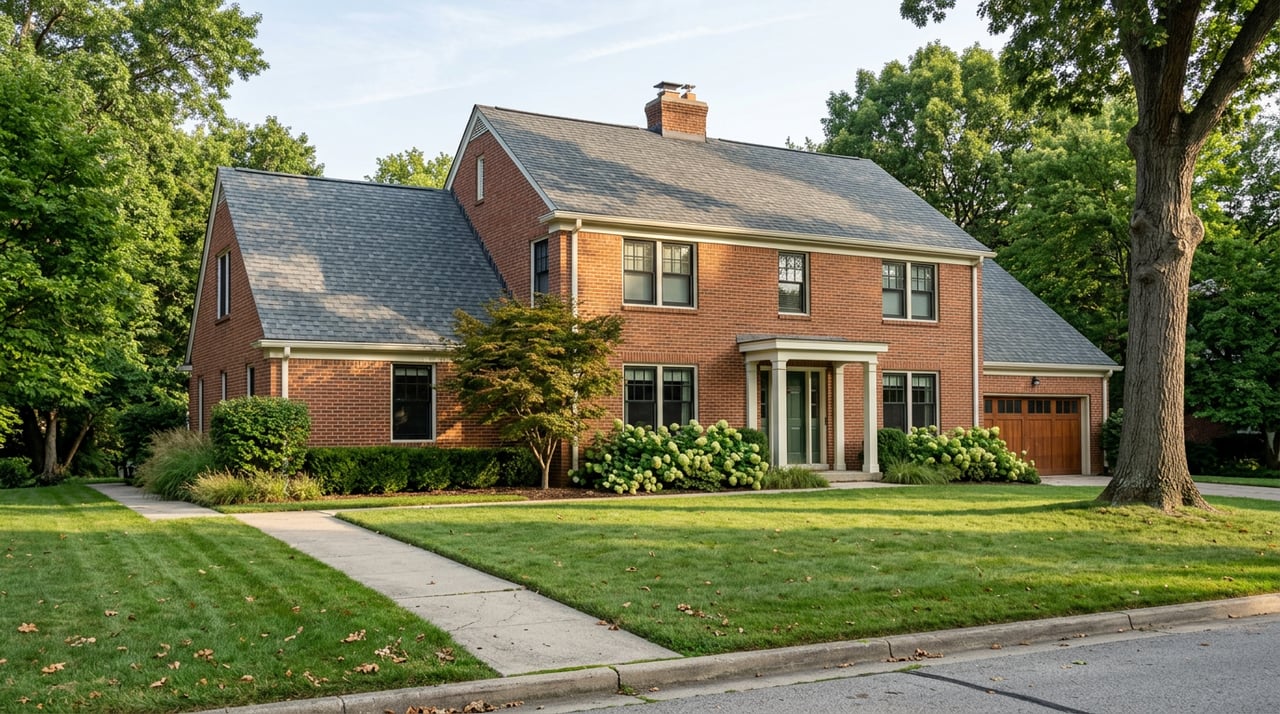
Glen Carbon Home Prices and the Proposed $1.97 Billion Development: What Buyers and Sellers Should Know
September 17, 2026
September 17, 2026
A $1.97 billion entertainment and retail district is not a rumor in Glen Carbon anymore. The village board voted unanimously in February 2026 to establish the boundaries for a sales tax and revenue bond district on 1,500 acres of farmland near the intersection of Interstates 255 and 270, and the story has been moving fast enough that it now shapes how people talk about buying here.
Here's the number that doesn't match the headline. In the 62034 zip code, the median list price hit $419,500 in March 2026, and homes sat on the market for 174 days, compared to 24 days the year before. Together, the figures show a high median list price alongside a longer time on market in that zip code; they do not establish whether the proposed development is affecting asking prices.
It helps to be precise about what happened, because the coverage has moved faster than the process itself. Glen Carbon's board voted to set the boundaries for a STAR bond district, a step that lets the state evaluate whether the project qualifies for financing. The proposal now goes to Illinois state agencies for a 60 day review, and if it clears that stage, the governor's office gets another 30 days to weigh in. Erika Heil, the village's director of community development, has been clear that the board's vote does not lock Glen Carbon into the development and does not approve construction.
The master developer is Destination Illinois LLC, run by brothers Chad and Ryan Holland, who also operate CR Holland Real Estate with existing locations in O'Fallon and Belleville. Their plan describes a "premier entertainment, tourism and mixed-use destination" that would eventually include retail, hotels, sports and recreation facilities, waterfront attractions, music venues, multifamily housing, and restaurants, though specific tenants haven't been finalized. Project documents point to 13,750 temporary construction jobs, 2,790 full-time positions, and 3.5 million square feet of buildings across the site.
That's a genuinely large project. It is also, as of this writing, mostly farmland waiting on a government answer.
STAR bonds sound like free money for a town, and that's worth untangling, because the mechanism is the whole story.
A STAR bond district doesn't create a new tax. It captures the growth in sales tax revenue generated inside the district, above whatever that same area was already producing, and redirects that increment to repay bonds issued for construction and infrastructure. If the shops, restaurants, and attractions inside the district generate more sales tax than the site produced as farmland, that new money services the debt. If they don't, the state's own guidance notes the risk falls on the bondholders or the local government, depending on how the bonds are structured, not on a new line item on your property tax bill.
That distinction matters for anyone weighing in on the project from a homeowner's chair. The STAR bond financing itself isn't a tax increase on Glen Carbon residents. What it does change, regardless of whether the bonds ever get repaid on schedule, is the physical reality on 1,500 acres near your interchange: traffic patterns, converted farmland, and a multi-year construction footprint that starts well before any retailer opens its doors.
Illinois only expanded this financing tool statewide in December 2025, and Glen Carbon is the first Metro East community attempting to use it. There's exactly one precedent in the state, and it's worth a look before anyone treats a STAR bond district as a guaranteed value bump.
Illinois' only prior STAR bond district sits in Marion, in the southern part of the state, where a $112 million project promised to convert a struggling mall into an entertainment destination. The plan included Mountain Dew Park, home field for the Thrillville Thrillbillies, plus a go-kart course, put-put golf, and outdoor pickleball courts. The governor visited in person to tout it.
Then, within weeks, one of the project's own developers faced a foreclosure action on land inside the district, tied to millions of dollars in unpaid debts across his other businesses. Multiple banks filed collection actions. Tax cases and a labor lawsuit followed.
None of that means Marion's project is dead, and none of it means Glen Carbon's will follow the same path. It means the financing tool being used here has a real world track record of exactly one attempt, and that attempt encountered the legal and financial issues described above. That's a useful caution for anyone assuming a STAR bond approval is the finish line rather than the starting gun.
Back to the number that started this piece, because it's the most useful thing a buyer or seller in Glen Carbon can look at right now.
| Source | Metric | Figure | Window |
|---|---|---|---|
| Portal aggregate | Median list price | $407,000 | April and June 2026 |
| Portal aggregate | Median sold price | $341,000 | Trailing 12 months |
| Portal aggregate | Median sale price | $354,000, up 7.4% year over year | 3 months ending May 2026 |
| 62034 zip specific | Median list price | $419,500 | March 2026 |
| 62034 zip specific | Days on market | 174 days, versus 24 days a year earlier | March 2026 |
Line those up and a pattern appears. List prices across Glen Carbon sit in the $400,000 to $420,000 range. What actually closes runs $50,000 to $80,000 lower, in the low $340,000s to mid $350,000s. And the time it takes to get from list to close has stretched dramatically in at least one zip-level slice of the data.
The gap between list prices and closed sale prices is one point to consider when assessing the market. Closed sales reflect transactions in Glen Carbon as it exists today, while the proposed project has not yet cleared state review; these figures do not establish whether the proposal has influenced sellers' asking prices.
None of this means Glen Carbon isn't growing. It means the STAR bond project and the town's actual, delivered growth are two different things, and the figures here do not establish whether either is reflected in closed sale prices.
Orchard Town Center, straddling the line between Glen Carbon and Edwardsville, already has an open Olive Garden and Chick-fil-A busy enough to draw steady drive-through lines, and construction is underway on a Meijer that will be that grocer's first location in the St. Louis metro. Census figures cited in local reporting show Glen Carbon's population grew by roughly 1,000 people and Edwardsville's by more than 2,000 between 2010 and 2020. That's growth that's already happened, already shows up in the retail mix, and already influences the neighborhoods buyers are searching for. It's a far more reliable signal than a 1,500 acre proposal still waiting on the governor's office.
If you're a buyer, the practical takeaway is simple: don't pay a premium for a story that hasn't cleared state approval, let alone broken ground. Look at what a home is worth against recent closed comparables in its immediate area, not against a list price that may be pricing in a decade of hoped for development. If a home has been sitting well past the local average, ask why. It may be a pricing problem more than a property problem.
If you're selling, the days on market data is the flashing light worth paying attention to. The 62034 numbers show a high ask alongside a long, quiet listing, though they do not establish whether the proposed project affected either. A price grounded in what's already closed nearby, including homes near the delivered growth around Orchard Town Center, tends to move faster and hold up better under appraisal.
Either way, the through line is the same one that shows up in every good real estate decision: separate what's been approved from what's been announced, and price accordingly.
Will my property taxes go up because of the STAR bond district? STAR bonds are repaid using the growth in sales tax revenue generated inside the district, not a new property tax. The mechanism doesn't add a line item to a Glen Carbon resident's tax bill on its own.
How long before this development could actually be built? The proposal still needs state approval, a governor's office determination, and further local decisions before construction begins. Given the 1,500 acre scope and the multi-step review process, a multi-year timeline is realistic, and the project could also be modified or scaled back along the way.
Is Glen Carbon's home price growth guaranteed to continue? No. Recent data shows a real gap between what sellers are asking and what's actually closing, along with a sharp increase in days on market in at least one zip code. Those figures do not establish whether, or how much, the proposed project is reflected in today's prices.
If you're trying to figure out what a specific Glen Carbon property is actually worth against real closed sales, not against a hoped for development timeline, the team at Wylde Realty Team can walk through the current comparables with you. Contact Us to talk through your specific situation before you price a decision on a headline.
This article is general information, not legal, tax or financial advice. Consult a qualified professional about your situation.
Stay up to date on the latest real estate trends.
Your goals come first. With real estate experience, investment knowledge, and a creative approach, we’re here to find solutions that make your next move simple, strategic, and successful.
Wylde Realty Team
101 E Clay St Collinsville, IL 62234